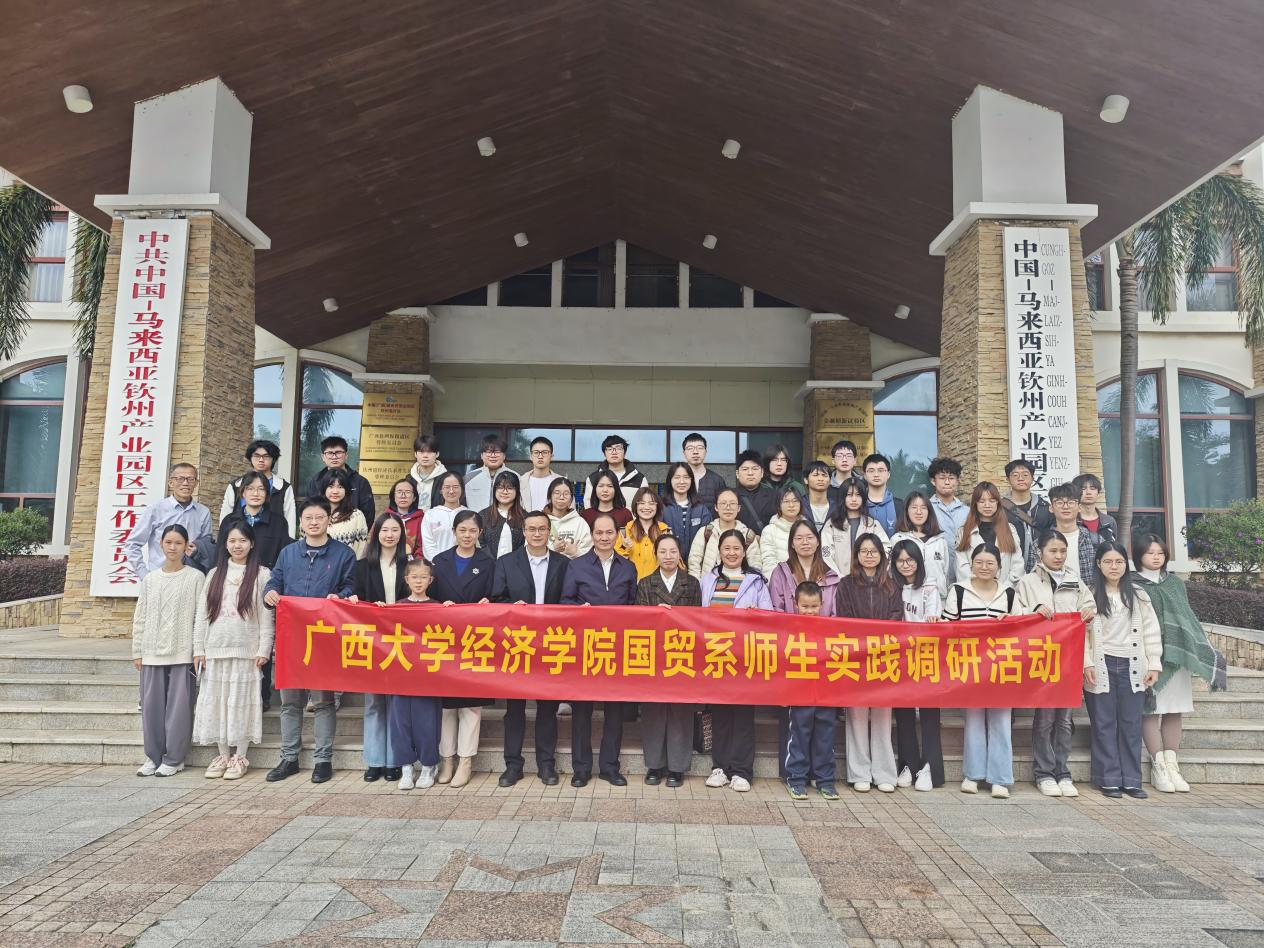
Group Photo
To gain a precise understanding of the trade, logistics, and port-related industrial development in Guangxi's Beibu Gulf Port, enhance universities' capacity to serve local economic growth and students 'practical skills, and deepen exchanges and cooperation with the Qinzhou Port Area, the department of International Economics and Trade led a 50-member delegation on December 15. The team included Prof. Liu Zhuguang and Prof. Li Hong, Assoc. Prof. Wang Yujie and Assoc. Prof. Chen Weihong, Assoc. Prof. Wei Sujie, and Dr. Jiang Shiqi, along with undergraduate and graduate students majoring in International Economics and Trade. They conducted an on-site survey in the Qinzhou Free Trade Zone, accompanied by Lin Gang, Director of the Trade and Logistics Development Bureau of the Qinzhou Port Area, and alumnus Pan Jinxin, a staff member.
At the beginning of the research, the group arrived at the model area on the first floor of the China-Malaysia Qinzhou Industrial Park Management Committee. By watching a special promotional video and listening to a construction briefing, they gained a comprehensive understanding of the park's development overview. Approved by the State Council in March 2012 as a key industrial park, it forms a globally pioneering "two countries, two parks" cooperation model with the Malaysia-China Kuantan Industrial Park, coordinating the jurisdiction of multiple national-level parks. The park focuses on developing industries such as port and shipping logistics, international trade, green chemicals, new energy vehicles, equipment manufacturing, electronics and information technology, biomedicine, and forestry, grain, and oil processing, aiming to build an international gateway port for the New Western Land-Sea Corridor and a demonstration zone for China-ASEAN cooperation.
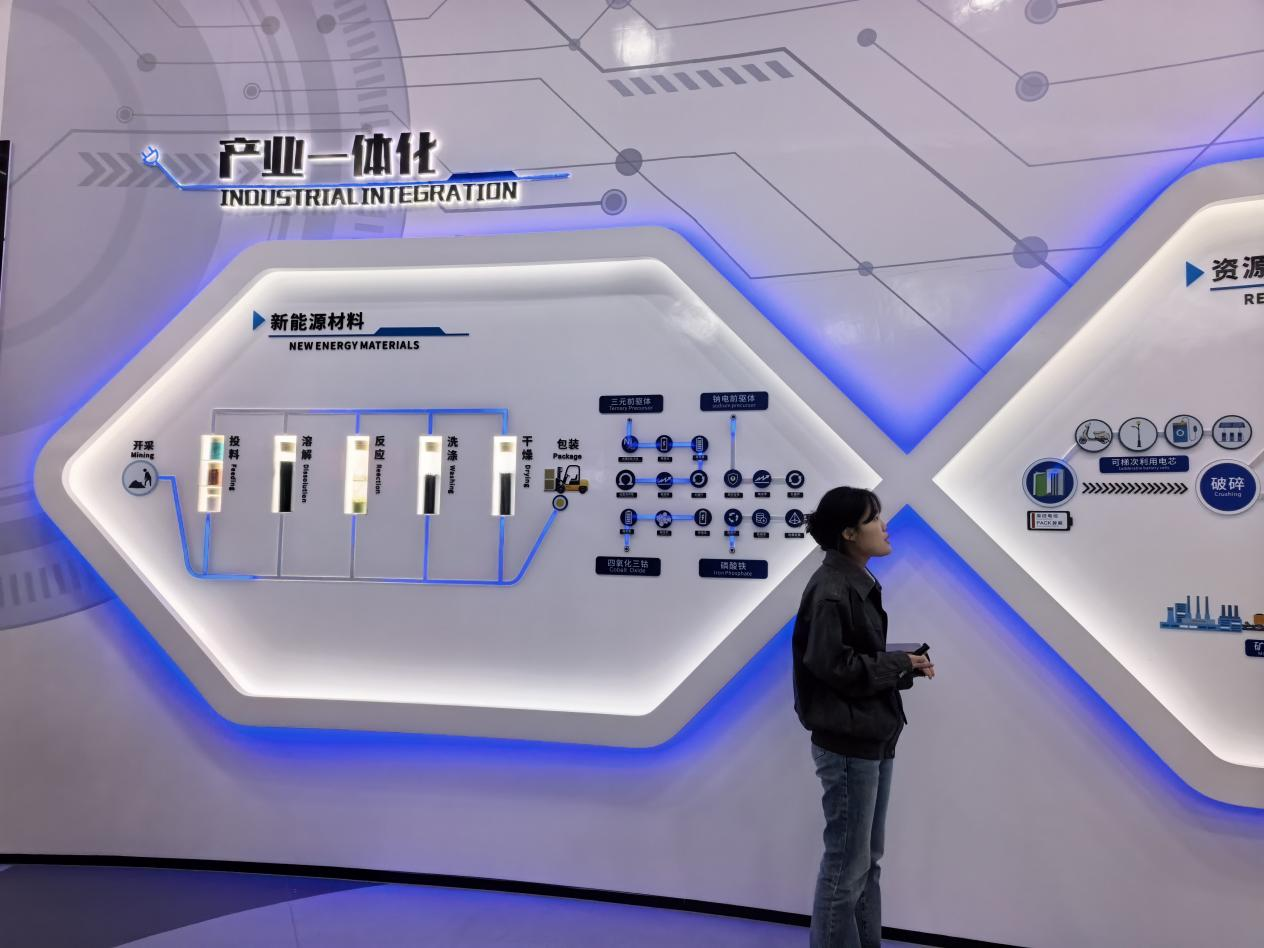
Representative from Zhongwei Technology Delivered a Brief Overview of the Company
The research team then visited Guangxi Zhongwei New Energy Technology Company, a national high-tech enterprise established in February 2021 specializing in lithium battery precursor materials. Its core ternary precursors are primarily supplied to the power battery sector and exported to markets across Japan, South Korea, Europe, and the United States. Recognized for its advanced technology, the company has been awarded titles including National Enterprise Technology Center and "National Intelligent Manufacturing" demonstration status. The company's representatives provided a detailed overview of its development history and product portfolio, allowing the faculty and students to gain firsthand insight into the technological innovations and market potential of the new energy industry.
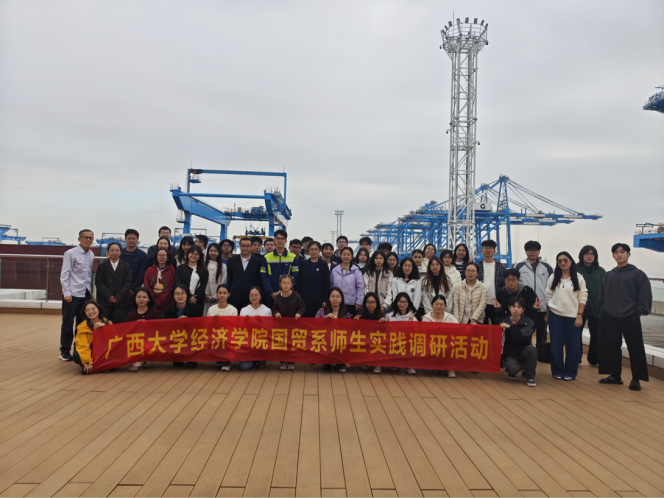
The Team Took a Group Photo at the Qinzhou Automated Container Terminal in the Beibu Gulf
In the afternoon, the research team visited the Qingsheng Wine Warehouse of Guangxi Qinzhou Port Area Development and Investment Group Co., Ltd. and its wholly-owned subsidiary, Guangxi Qinseng Industrial Company. As a state-owned enterprise directly under the port area, the group specializes in core operations such as bulk commodity supply chain management and port-related industrial investments. Its import portfolio includes commodities like soybeans and palm oil, as well as specialty products such as red wine and durian, having nurtured renowned brands including "Shengxuanming Wine" and "Liuyouyou". At the warehouse, the team gained insights into the innovative "Qinzhou Model" for imported wines—a customized OEM service model for imported liquor.
The final stop of the research tour took faculty and students to Qinzhou Automated Container Terminal in the Beibu Gulf, where they examined the terminal's construction, shipping routes, liner operations, and smart port development. As the world's first U-shaped layout and China's inaugural fully automated sea-rail inter-modal container terminal, it features intelligent gateways and dedicated channels for efficient traffic diversion, offering notable advantages in efficiency, cost-effectiveness, and scalability. Leveraging its proximity to railway yards, the terminal is pioneering a seamless sea-rail inter-modal model that enables "offloading to loading and loading to offloading," providing a valuable Beibu Gulf solution for global automated terminal development. The project's completion will significantly contribute to establishing Beibu Gulf Port as a national railway container transport hub, integrating into the global logistics network, and creating an international gateway port for the New Western Land-Sea Corridor.
This research initiative has created a high-quality platform for teachers and students to deeply integrate theory with practice, enabling them to gain comprehensive insights into the development achievements of Qinzhou Port Area in port-related industries, international trade, and smart logistics.
Written by Liu Zhuguang, Liu Qianqian
Translated by AI
Proof Read by Yu Na, Chen Yanyang
Edited by Gan Ziying
Reviewed by Gong Zheng


 Wechat
 ADD:No.100 Daxue Road, Nanning, Guangxi, China
 Tel/Fax:+86-0771-3186687
 Email: